Seldon Wishnow
The Plot Against AmericaSeldon Wishnow’s story traces a movement from a lonely boy’s unwanted dependence on Philip Roth to a relationship of rescue and care. A gifted chess player and arithmetic prodigy, he loses both parents amid illness, forced relocation, and political violence. When Philip runs away, Seldon follows him into the night and saves his life; later, left alone in Kentucky, he calls the Roth family for help. His return to Newark leaves him not simply Philip’s companion but, in Philip’s retrospective understanding, someone for whom he must become a source of support.
Identity and Family Background
Seldon is the only child of Mr. Wishnow and Mrs. Wishnow, neighbors of the Roths in Newark. The families’ lives are linked by work and routine: Mr. Wishnow, like Herman Roth, is an insurance agent with the Metropolitan Life Insurance Company, but illness has kept him from working for more than a year. Mrs. Wishnow takes over his job, becoming the first female insurance agent in the Newark district, and keeps the long hours that Herman works. When she cannot get home in time to prepare dinner, Bess Roth makes extra food, and Philip and Sandy Roth carry warm plates downstairs for Mr. Wishnow and Seldon.
The household visits place Seldon close to his father’s decline. Mr. Wishnow is too ill to feed himself, and his cough is a persistent presence in the apartment. He asks Philip for jokes, while Seldon sometimes invites Philip to accompany him on errands to the drugstore. Philip understands that Mr. Wishnow is dying, and sees Seldon as a boy burdened by loneliness, trying hard to maintain a smile. That effort at cheerfulness does not make Seldon’s need for company less apparent; it makes Philip’s discomfort with that need more pronounced.
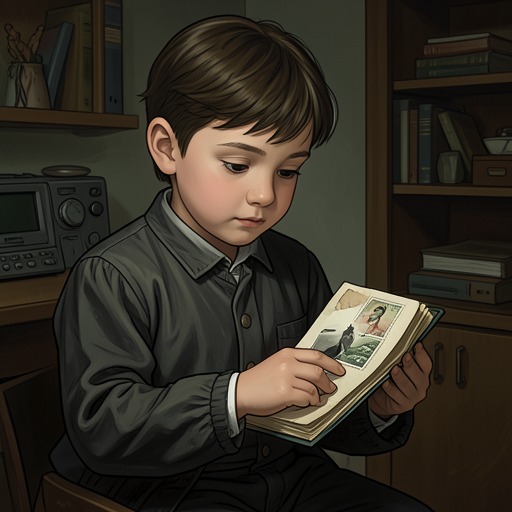
Seldon is physically slight and pallid, and Philip recalls that he was not a confident ball player. His gifts lie elsewhere. He is the smartest pupil in their class and a schoolwide standout at arithmetic, an accomplished chess player taught by his father, and unexpectedly nimble on the ropes in gym. Chess gives father and son a shared practice, and the game’s material traces matter to Seldon: his father made the board and found the wooden pieces. After Mr. Wishnow’s death, Seldon repeatedly returns to those objects and their history, keeping his father present in conversation even as Philip would rather avoid the subject.
Bereavement and Philip’s Withdrawal
Mr. Wishnow dies by suicide. Seldon discovers his father at home after school, and police and medical personnel arrive at the building. Philip initially feels relief that he will no longer hear Mr. Wishnow’s coughing when alone in the cellar or trying to sleep. That response soon turns into fear and guilt: he imagines the dead man joining the ghosts he associates with the cellar and haunting him because he was relieved. The event alters Philip’s relation to Seldon as well. Rather than bringing them closer, the bereavement intensifies Philip’s aversion.
In the days that follow, Philip changes his routine to avoid Seldon. He hides behind the school when Seldon is waiting outside, leaves home early in the morning to get ahead of him, and pretends not to be home when Seldon comes over with a chessboard. When Bess urges Philip to play, she reminds him that Mr. Wishnow was a fine chess player and had taught his son. At the table, Seldon talks about the special wood and the way his father made the board and found the pieces. Philip cannot bear these repeated recollections and tries to redirect the conversation with jokes he has heard at school. The contrast is central to their early relationship: Seldon reaches toward Philip through companionship and memory, while Philip resists both.
Philip also imagines that the Roth family will move into the Wishnows’ apartment, making escape from Seldon impossible. He pictures himself sharing a bedroom with Seldon and having to use the closet in which Mr. Wishnow died. Instead, he plans to flee to Philadelphia and find Alvin Roth, taking money Alvin had given him and intending to care for Alvin’s injured leg. To prepare, Philip secretly takes clothes from Seldon’s room and hides them in a small, water-stained suitcase. Seldon’s presence in the plot thus becomes part of Philip’s attempted escape, although it is Seldon who will ultimately prevent that escape from ending in disaster.
Relocation and the Night Philip Runs Away
Under Homestead 42, the Wishnows are relocated from Newark to Danville, Kentucky. The move places Seldon in an unfamiliar community and separates him from the relationships and routines he had known. Philip fears that the two boys will be expected to rely on each other there: they will be the only Jewish pupils in the Danville elementary-school system. He experiences Seldon’s increasing closeness as an added burden, but that closeness also helps make Seldon alert to Philip’s plans.
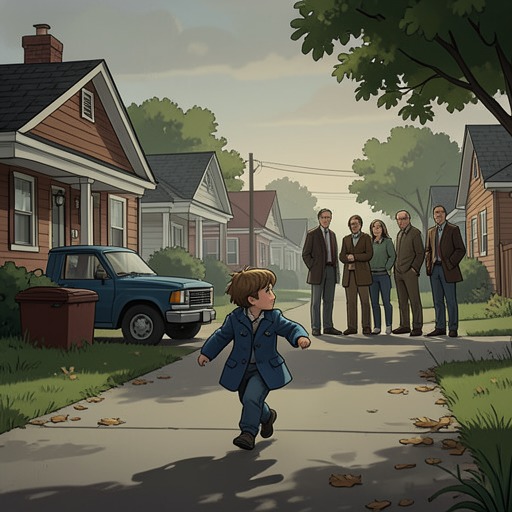
When Philip slips out of the house and heads for the orphanage, Seldon follows him. Philip is later found unconscious and badly hurt after an encounter with the orphanage’s horses. Seldon runs back to wake Herman and Bess, then guides them through the dark to the place where Philip lies. His parents help organize the rescue, but Philip recognizes that Seldon’s decision to follow him saved his life. Seldon tells the story afterward with the excitement of someone who has become, for once, indispensable and heroic in the eyes of others. He also shows people his scraped feet, evidence of the difficult journey he made between the orphanage grounds and home. The episode reverses the earlier pattern: the boy Philip tried to evade becomes the person on whom his survival depends.
Alone in Kentucky and the Call for Help
Philip and Seldon’s connection continues after the move, though distance and loneliness reshape it. When Philip speaks to Seldon by telephone, Seldon responds cautiously, almost as if unsure that Philip is really there. On the eve of his birthday, he explains to Bess that he has no friends in Danville. Children there call him Saltine, and his only chess companion is a six-year-old neighbor whom he has taught to play. Seldon wins their games, but the victories do not answer his need for a peer or make the game enjoyable. His account gives concrete measure to what relocation has cost him: not only a home, but familiar company and the ordinary friendships of school.
During the political crisis in 1942, Seldon’s isolation becomes dangerous. His mother drives to Louisville for a meeting with her district supervisor and does not return. Unable to reach anyone else, Seldon calls the Roths collect late at night. He is ten, has not eaten, and is alone in the house. At first he can scarcely explain his fear; then he insists that his mother is dead, as his father was. Bess tries to reassure him and suggests that Mrs. Wishnow may simply be delayed, but Seldon’s conclusion proves correct. Mrs. Wishnow has been killed during the anti-Jewish violence near Louisville, and her burned-out car is found the following day.
Bess responds not by leaving Seldon to manage the crisis alone but by arranging immediate help. She contacts the Mawhinneys, who agree to take him in for the night, and gives Seldon a practical plan: gather basic clothes and toiletries, leave his mother a note, and wait for Mr. Mawhinney’s truck. She also tells him that Herman is prepared to drive to Kentucky and bring him back to Newark. Seldon’s call reveals how complete his dependence has become, but it also draws out the Roths’ commitment to him. The family’s response turns his plea for help into a promise of shelter and return.
Return to Newark and Narrative Significance
After Seldon and the Roths return safely to Newark, Sandy moves into the sun parlor, and Seldon takes the bed beside Philip that had previously been occupied by Alvin and Aunt Evelyn. He remains with the family until he goes to live with his mother’s married sister in Brooklyn ten months later. The arrangement makes the consequences of his losses part of the Roth household’s everyday life rather than a distant account of events in Kentucky.
Philip describes his care for Seldon through the image of a prosthesis. Earlier, Philip had tended Alvin’s injured leg; now, he says, Seldon himself is the stump, and Philip is the prosthesis. The comparison conveys both the child’s vulnerability and the altered direction of their relationship. Philip once experienced Seldon’s efforts at friendship as an intrusion and tried to escape him. After Seldon follows him into the dark and saves him, Philip’s role changes: he becomes the companion and support for a boy who has lost his father and mother. Seldon’s arc therefore binds private acts of care to the novel’s larger account of displacement and persecution. In a world that repeatedly takes away his home and family, the connection with Philip becomes an imperfect but sustaining form of belonging.